
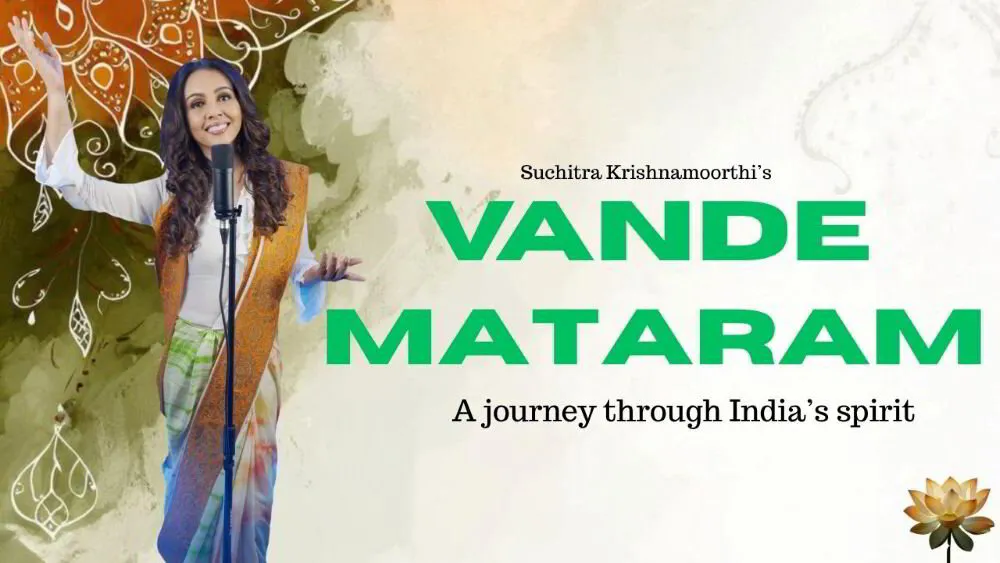
Vande Mataram: My Prayer for India
For as long as I can remember, I have wanted to sing Vande Mataram. It isn’t just a song, it’s so much more. It’s a poem, a protest, a prayer—braided into the history of this country. I grew up hearing it in many versions, I heard it in pulsating drums, crowds, slogans, the chest-thump of patriotism. Powerful, yes. But in my heart I heard something softer. I heard a hymn embodying the spirit of our nation.
When I finally recorded my version and released it on the eve of Independence Day 2025, I chose devotion over volume.
My journey with Vande Mataram has been transformative, melding my love for music with my deep-rooted patriotism.
I wanted to bow my head, not raise my fist. I wanted reverence, not aggression
I wanted Vande Mataram to feel like entering a temple at dawn—barefoot, quiet, grateful.
That’s the mood I carried into the studio and onto the screen.
My director, Seshu Kumar, and I used a mix of modern tools—AI systems and visual engines stitched together with music and intent—to tell a contemporary story that still feels timeless. Whole sequences were crafted with AI and compositing.
Vande Mataram: A Tribute to Our Nation
Suchitra Krishnamoorthi’s Vande Mataram: A Musical Exploration
Suchitra Krishnamoorthi Vande Mataram: A Personal Journey
People kept messaging me, “Was that really you on that train? Was that really you in Kashmir?” The illusion pleased me, but the point was never the trick. The point was the feeling.
Singing it felt like opening a window to an older wind.
Bankim Chandra Chattopadhyay first wrote Vande Mataram as a poem in his novel Anandamath in 1882, and it traveled from page to people with a speed only truth enjoys.
It was sung at Congress sessions, banned by the British, and carried in hearts through many long days and nights until freedom arrived. In January 1950, our Constituent Assembly resolved that Vande Mataram would be honored as the national song of India, alongside Jana Gana Mana. The language is Sanskrit-rich Bengali, but the emotion is universal: “I bow to thee, Mother.” That bow is what I wanted to bring back.
I didn’t want to argue with anyone’s version. I simply wanted to add mine—gentle, prayerful, intimate.
The arrangement leans toward melody and breath; the video leans toward awe and belonging. Technology helped us paint the vision, but the devotion is human. If this rendition leads even one listener to more reverence for India—more tenderness for the land that holds us all—I’ll consider the work done well.